

The challenge
Since 1954, Fustes Sebastia has been providing construction solutions in wood for sustainable and efficient buildings. Its philosophy is based on the use of certified wood from sustainable sources in the Pyrenees, a choice with environmental advantages that can now be measured using life cycle assessment (LCA) tools. The company also maintains an active commitment to innovation and awareness-raising through workshops, experiences, and participation in forestry and construction industry events.
From a regulatory perspective, regulations regarding the decarbonization of buildings and the environmental transparency of materials pressure construction product manufacturers to measure and declare the environmental footprint of their products.
To this is added that the certifications for sustainable construction —LEED, BREEAM, VERDE or Edificio Sostenible (AENOR)— consider the environmental labels type III (DAP/EPD) within their schemes, so that their absence becomes de facto a barrier to access to this type of projects.
Fustes Sebastia therefore faced a twofold challenge:
- Quantitatively and verifiably demonstrate the environmental impacts of their construction systems.
- Obtain environmental declarations for their products to overcome market barriers and improve their competitiveness.
The solution
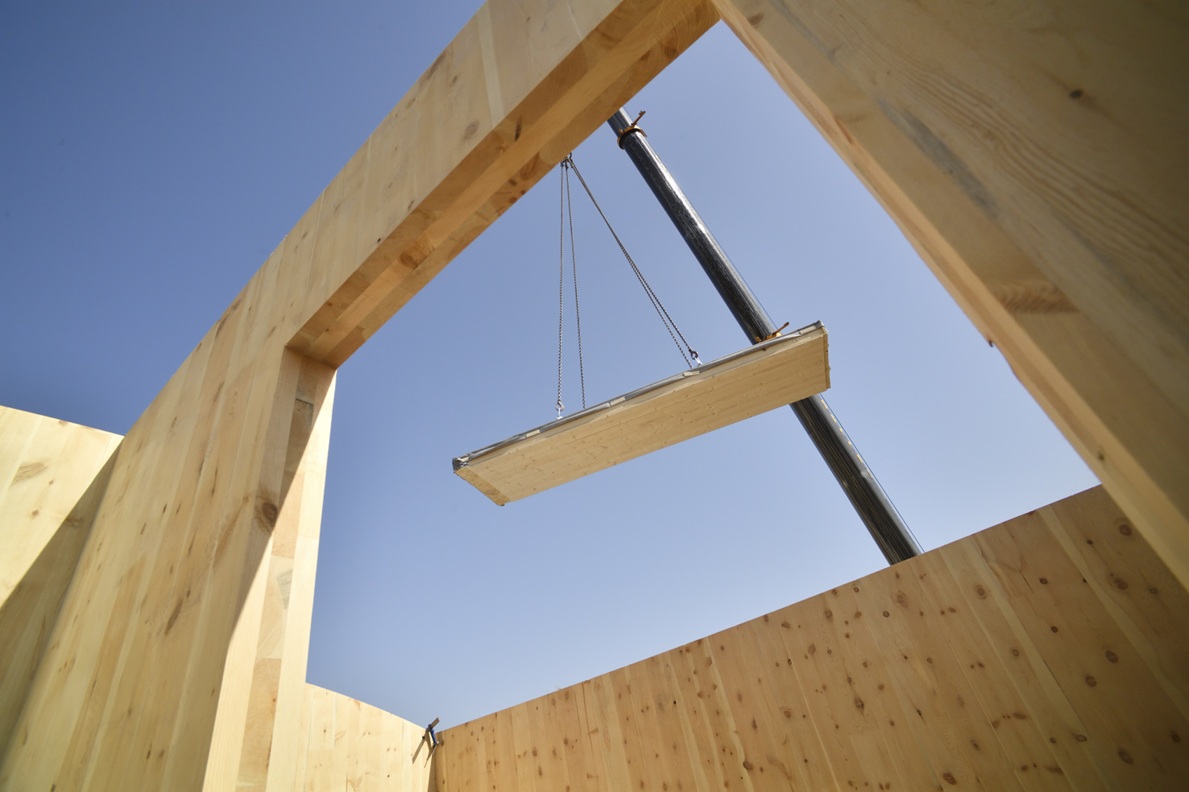
Alongside Zirkel, the Environmental Product Declarations (DAP) for laminated beam and cross-laminated timber (CLT) have been developed; these are structural products made of parallel-glued wood sheets (laminated beam) or perpendicular-glued wood sheets (CLT), with different applications and uses in each case.
DAP have been developed in accordance with the product category rules for wood and wood-based products for construction use (EN 16485:2014), and include the entire life cycle: from logging of logs in the forest, through manufacturing, transportation to the construction site, the use phase and the end of life, to the potential for reuse, recovery and recycling.
Zirkel’s work has included collecting and validating plant data, modeling the life cycle analysis of both product systems, and providing support to the manufacturer during verification and registration.
Wood presents its own methodological challenges, such as the forest stage, the co-products of sawing and the accounting of biogenic carbon, so the actual production data has been supplemented with scientific literature and recognized ACV databases, justifying each hypothesis before the verifier.
The DAP have been verified by an independent entity and registered in the AENOR Global EPD program.
Value contributed
- Own and verified environmental informationFustes Sebastià now has verified indicators for its products, such as greenhouse gas emissions or the biogenic carbon stored, and can declare them with confidence to customers and prescribers.
- Base for communication and awareness-raisingThe own data provide quantified support for the workshops and outreach activities that the company carries out.
- Improvement of competitivenessfavourable positioning in projects and tenders that require sustainability criteria and EPDs.
- Design with an environmental perspectiveIdentifying the stages and processes that concentrate the impacts allows for ecodesign decisions regarding the product and the production process.
Conclusion
With the laminated beam and CLT DAP products, Fustes Sebastia strengthens the environmental credibility of its products before customers and prescribers, and complies with the product requirements required in construction projects certified for sustainability. It also has its own, verified data to communicate, raise awareness of, and continue improving the environmental profile of a range that starts with a renewable and locally sourced raw material.
 EN
 ES
 CA
 FR